“The islands will put their hope in the teaching of the Lord!”
He will not falter or be discouraged till he establishes justice on earth. In his teaching the islands will put their hope.(Isaiah 42:4,NIV)
Sao Tome and Principe
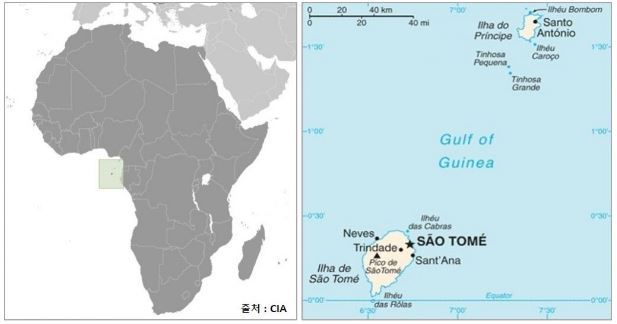
》 Country Profile
Continent| Africa
Population | 210,000
Area | 964㎢, Located in the Gulf of Guinea, about 300 km off the coast of Gabon in west-central Africa.
Capital City | São Tomé (80,000 people)
People Groups | Total 6 Groups, Forro (descendants of Portuguese colonists and African slaves) 86.4%, Cape Verdean Mestizo 6.8%, Angolan 3.7%
Official Language(s) | Portuguese
Total languages | 6 Bible translations | Completed 1, Partial 1
Religion | Christianity 86.2% (Protestant 4.7%, Catholic 72%) Evangelical 6% (Approximately 10,000 people)
》 About Sao Tome and Principe
São Tomé and Príncipe consists of two main islands, São Tomé and Príncipe. It was discovered by Europeans in 1471 and became a Portuguese colony in 1522.
In the late 15th century, the Portuguese introduced sugar cultivation, making the islands Africa’s leading sugar exporter. However, by the 19th century, cocoa and coffee plantations replaced sugar as the primary crops. In 1953, the Batepá Massacre occurred when Portuguese authorities violently suppressed protests against the abuse of enslaved laborers, killing many workers. After the fall of Portugal’s dictatorship in 1974, São Tomé and Príncipe gained independence in 1975. The country held its first multi-party elections in 1991, and Carlos Vila Nova has served as president since 2021.
São Tomé and Príncipe’s economy is heavily dependent on agriculture, with 80% of its farmland dedicated to cocoa plantations, and cocoa making up 90% of total exports. However, the country imports 70% of its food and relies on imports for fuel, manufactured goods, and consumer products. As a result, fluctuations in global commodity prices significantly impact inflation. Unemployment remains high, and the government is implementing economic reforms and privatization to reduce debt and stimulate growth. The country also faces serious environmental issues, including deforestation, coastal erosion, poor waste management, and mismanagement of natural resources. Sao Tome and Principe’s GDP per capita is approximately $3,244.
》 Scripture Focus
| Isaiah 42:4-8, 10(NIV) 4 He will not falter or be discouraged till he establishes justice on earth. In his teaching the islands will put their hope. 5 This is what God the LORD says— the Creator of the heavens, who stretches them out, who spreads out the earth with all that springs from it, who gives breath to its people, and life to those who walk on it: 6 “I, the LORD, have called you in righteousness; I will take hold of your hand. I will keep you and will make you to be a covenant for the people and a light for the Gentiles, 7 to open eyes that are blind, to free captives from prison and to release from the dungeon those who sit in darkness. 8 “I am the LORD; that is my name! I will not yield my glory to another or my praise to idols. 10 Sing to the LORD a new song, his praise from the ends of the earth, you who go down to the sea, and all that is in it, you islands, and all who live in them. |
》 Prayer Points
1. More than 70% of the population in São Tomé and Príncipe are Catholics, but many aspects of African spirit worship have blended into their faith, creating syncretism. Additionally, cults such as Jehovah’s Witnesses, Seventh-day Adventists, and the Unification Church are growing due to their passionate evangelism. Nevertheless, let us thank the Lord that evangelical churches are also growing. Let us pray that these churches will hunger for God’s teachings and be strengthened in their faith so that the gospel of the cross of Christ may be clearly preached and witnessed. The country’s name comes from Saint Thomas (São Tomé) and the Prince (Príncipe). Let us pray that the church in São Tomé and Príncipe will rekindle the passion it had when it first received the gospel and be established as a light to the nations in Africa and beyond.
2. Portuguese is the official language, but Portuguese Creole and regional languages such as São Toméan, Angolar, Príncipe, and Fang are widely spoken depending on the region and ethnicity. Let us pray that God will raise up missionary organizations and workers who can convey His heart to each ethnic and linguistic group. May interdenominational training centers be established to equip local pastors and the next generation as spiritual leaders. Let us also pray for the Angolan migrants and contract workers living in São Tomé and Príncipe. May the gospel reach them, and may the islands and their people sing a new song to the Lord, glorifying His name.
Saint Helena
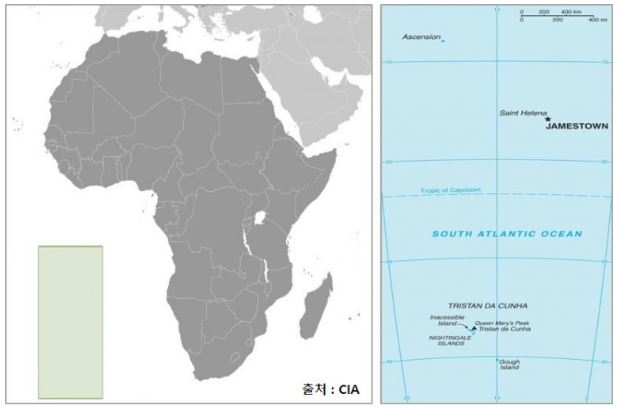
》 Country Profile
Continent| Africa
Population | 8,000
Area | 425㎢ , A British overseas territory located in the South Atlantic Ocean, about 1,900 km west of the African continent.
Capital City | Jamestown (1,000 people)
People Groups | Total 1 Groups, Saint Helena 100% (African 50%, Caucasian 25%, Chinese 25%)
Official Languages | English
Total Languages | 1 Bible Translations | Completed 1
Religion | Christianity 95% (Protestant 7%, Anglican 84%) Evangelical 8.8% (Approximately 700 people)
》 About Saint Helena
Saint Helena is a British overseas territory that includes Ascension Island and Tristan da Cunha. It was first discovered by the Portuguese in 1502 and later came under Dutch and Portuguese control before becoming property of the British East India Company in 1673. In 1834, it became a direct colony of the British Crown. The island is most famous as the place of exile for Napoleon Bonaparte. In 1815, he was escorted by a British warship and lived in exile on the east coast of the island until his death in 1821. Saint Helena was historically an important stopover and supply port for ships traveling around the Cape of Good Hope between Europe and Asia. However, it lost its strategic importance with the opening of the Suez Canal. During World War II, it served as a British naval base, and today, along with Ascension Island, it functions as a relay point for long-distance communications.
The economy is primarily agricultural, with some tourism. The island gained fame as a tourist destination because of its connection to Napoleon. The local population earns income through fishing, livestock breeding, and selling handicrafts. Due to limited economic opportunities, about 25% of the population has migrated to the Falkland Islands and the UK in search of work. The island struggles economically and remains dependent on financial aid from the UK government.
Saint Helena’s GDP per capita is approximately $2,500.
》 Prayer Points
1. Saint Helena has a strong Christian tradition, with 84% of the population belonging to the Anglican Church. However, the vitality of the gospel has significantly diminished, and many believers have fallen into nominalism. Let us pray that God’s grace will awaken these believers, leading them back to the gospel and restoring spiritual life in the church. Due to the island’s isolation and limited resources, job opportunities are scarce, causing many young people to leave the island in search of work. As a result, the remaining population is aging, and youth crime is increasing due to economic hardship and lack of opportunity. The island’s remote nature makes it difficult to provide social support to address these challenges. Let us pray that the next generation in Saint Helena will seek the Lord’s teachings rather than the values of this world. May they rise up as a generation that praises the glory of God and brings spiritual renewal to their land.
》 Urgent prayer requests around the world need your prayer!