“Angola, take hold of the true life!”
In this way they will lay up treasure for themselves as a firm foundation for the coming age, so that they may take hold of the life that is truly life.(1 Timothy 6:19,NIV)
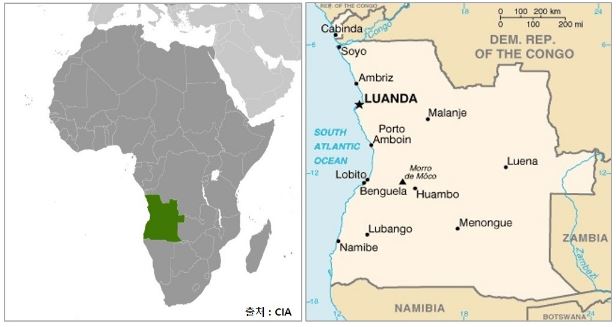
》 Country Profile
Continent | Africa
Population | 34.79 million
Area | 1,246,700㎢, Located on the Atlantic coast of southwestern Africa.
Capital City | Luanda (9.29 million people)
People Groups | Total 62 groups, Kimbundu 24.3%, Ovimbundu 22.7%, Kongo 10.3%, Chokwe 6.4%, Portuguese 6.2%, Nyaneka 3.2%, Nyemba 3.1%
Unreached People Groups | 1 (0.2% of the population)
Official Language(s) | Portuguese, Mbundu
Total Languages | 59
Bible Translations | Completed 24, New Testament 9, Partial 13
Religion | Christianity 91.7% (Protestant 16%, Catholic 59%), Ethnic religion 6.3%, Islam 0.9% Evangelical 23.1% (8.03 million people)
》 About Angola
Angola was part of the Kingdom of Congo from the late 14th century to the mid-19th century, extending across Central Africa from northern Angola to the Republic of Congo. The Portuguese arrived in the late 15th century and ruled for 450 years until Angola gained independence in 1975. Following independence, the Marxist People’s Liberation Movement of Angola (MPLA) seized power, leading to a 30-year civil war between the ruling party and democratic opposition forces. Although the war ended in 2002, it left 1.5 million dead, 4 million displaced, and devastated the country’s infrastructure. José Eduardo dos Santos ruled for 38 years (1979–2017) with an iron fist, before João Lourenço took over as president in 2017. João Lourenço was successfully re-elected in 2022 and is currently serving as President of the African Union (AU) in 2025, playing a leadership role not only in Angola but across the African continent.
Angola has enormous economic potential, boasting vast oil reserves, abundant diamonds, and fertile land suitable for agriculture. It is sub-Saharan Africa’s largest oil exporter, with oil making up over 90% of the country’s exports. Other major exports include diamonds, iron ore, cement, gold, coffee, seafood, and machinery. However, government corruption prevents oil revenues from benefiting millions of impoverished citizens. Despite its fertile land, Angola—once called the breadbasket of Southern Africa—has suffered land degradation and landmine contamination, making farming nearly impossible. As a result, millions have mi grated to cities, leading to severe social issues. Although Angola’s economy has grown significantly since 2002, income inequality remains extreme, and food shortages continue to be a major crisis. Angola’s GDP per capita is approximately $2,122.
》 Scripture Focus
| 1 Timothy 6:15-19(NIV) 15 which God will bring about in his own time—God, the blessed and only Ruler, the King of kings and Lord of lords, 16 who alone is immortal and who lives in unapproachable light, whom no one has seen or can see. To him be honor and might forever. Amen. 17 Command those who are rich in this present world not to be arrogant nor to put their hope in wealth, which is so uncertain, but to put their hope in God, who richly provides us with everything for our enjoyment. 18 Command them to do good, to be rich in good deeds, and to be generous and willing to share. 19 In this way they will lay up treasure for themselves as a firm foundation for the coming age, so that they may take hold of the life that is truly life. |
》 Prayer Points
1. Let us give thanks that although Angola endured 30 years of civil war and a Marxist regime that persecuted the church, the LORD caused the evangelical church to grow. Catholics make up 59% of the population, while evangelicals account for 23.1%, or about 8.03 million people. During the civil war, innocent civilians accounted for 90% of all casualties, and many homes and churches were destroyed. Deep tribal loyalties and political divisions remain, making forgiveness, healing, and restoration essential. However, false beliefs, biblical ignorance, witchcraft, and animism have infiltrated the church, negatively affecting its spiritual health. Many congregations struggle with division, legalism, and moral compromise due to a shortage of well-trained pastors. Although Angola has 25 Bible schools, 2 seminaries, and various theological education programs (such as Hope for Africa by the Assemblies of God and Theological Education by Extension (TEE)), the need remains great. Let us pray that godly pastors and leaders will be raised, firmly grounded in Scripture and prayer, to shepherd and unite the church. May the Angolan church place its hope in the eternal God, ministering to those wounded by war and offering true healing and restoration.
2. We praise God for the foreign missionaries who remained in Angola through the civil war, providing relief and support. Organizations such as World Vision International (WVI), Samaritan’s Purse, and Mission Aviation Fellowship (MAF) have been involved in healthcare, education, job training, and disease prevention. YWAM, OM, Brazilian Baptists, and Christ Community Church continue to partner with local churches for evangelism and discipleship. 70% of Angola’s population is under 24 years old, yet many have been deprived of education due to war and poverty. The maternal mortality rate is high, the infant mortality rate is the 13th highest in the world, and 45% suffer from chronic malnutrition. Let us pray that mission organizations such as OM, YWAM, AIM, and the Brethren will reach out to the most vulnerable children. May they encounter God as their Lord and King, be saved, find hope in Him who gives abundantly, and grow into missionaries of peace who share the gospel.
3. The civil war devastated Angola’s infrastructure, leaving many homes, hospitals, schools, and roads in ruins. Landmines have killed 1 in 350 Angolans, while tens of thousands live with disabilities. Organizations like World Vision, Tearfund, and the Angola Church Action Alliance are working to remove landmines and rebuild essential services. Refugee camps have formed in Luanda and other cities, filled with displaced families and orphans. Many war orphans lack family support, leaving them vulnerable to poverty, begging, and sex trafficking or slavery. This requries specific and practical helps from church and organization. Let us pray that Angola’s leaders will repent of corruption and conflict over oil and natural resources, turning to the cross. May they abandon selfish ambition, walk in humility, and care for the lives of war-affected citizens, promoting justice and righteousness in the land.”
》 Urgent prayer requests around the world need your prayer!