“See, the Lord is doing a new thing in Uganda!”
See, I am doing a new thing! Now it springs up; do you not perceive it? I am making a way in the wilderness and streams in the wasteland.(Isaiah 43:19,NIV)

》 Country Profile
Continent | Africa
Population | 47.72 million
Area | 241,038㎢ Located in the eastern interior of Africa.
Capital City | Kampala (3.84 million people)
People Groups | Total 69 groups, Baganda 17.6%, Hima 8%, Basoga 7.9%, Iteso 6.5%, Bakiga 6.4%, Lango 6%, Masaba 4.6%, Acholi 4.2%, Lugbara 3%
Unreached People Groups | 5 (2.5% of the population)
Official Language(s) | English, Swahili
Total Languages | 63
Bible Translations | Completed 37, New Testament 9, Partial 12
Religion | Christianity 83.1% (Protestant 43%, Catholic 40%), Islam 9.4%, Ethnic religions 5.8% Evangelicals 33.1% 15 million people
》 About Uganda
Uganda was first settled by the current ethnic groups in the 14th and 15th centuries, and in the 19th century, Arab traders, European explorers, and missionaries arrived. It became a British colony in 1885 and gained independence in 1962. However, the country remained unstable due to a series of military coups. In 1966, Obote seized power through a coup and ruled with a reign of terror. In 1971, Idi Amin overthrew Obote in another coup and established an even more brutal dictatorship, killing an estimated 300,000 people. Amin was ousted in 1979 by Yoweri Museveni’s revolutionary army with support from Tanzania. Museveni became president in 1986, and his regime saw intensified conflicts with the Lord’s Resistance Army (LRA). In 2017, the presidential age limit was removed, and the term length was extended to seven years. In 2019, Uganda’s Supreme Court approved a law that removed the age limit for presidential candidates. This allowed President Museveni, who was over 75 at the time, to run in the 2021 election. Ahead of the 2021 elections, the government shut down internet access, placed major opposition candidates under effective house arrest through police force, and suppressed public protests, ultimately securing a sixth term in office.
Uganda, often called the ‘Pearl of Africa,’ is a country known for its stunning landscapes and natural resources. It has fertile soil, consistent rainfall, significant oil reserves, and abundant deposits of copper, gold, and other minerals. Agriculture is a key sector, employing 72% of the workforce. Following the outbreak of conflict in South Sudan, Uganda’s export markets suffered a major downturn but have shown signs of recovery. Coffee accounts for 16% of exports, and gold contributes 10%, with both sectors playing a major role in economic improvement. However, challenges such as inadequate infrastructure, lack of modern agricultural technology, and widespread corruption continue to hinder economic growth. Access to electricity remains a significant issue, with only 22% of the population having access, and in rural areas, this drops to just 10%. Uganda’s GDP per capita is approximately $1,072.
》 Scripture Focus
| Isaiah 43:15-21(NIV) 15 I am the LORD, your Holy One, Israel’s Creator, your King. 16 This is what the LORD says— he who made a way through the sea, a path through the mighty waters, 17 who drew out the chariots and horses, the army and reinforcements together, and they lay there, never to rise again, extinguished, snuffed out like a wick: 18 “Forget the former things; do not dwell on the past. 19 See, I am doing a new thing! Now it springs up; do you not perceive it? I am making a way in the wilderness and streams in the wasteland. 20 The wild animals honor me, the jackals and the owls, because I provide water in the wilderness and streams in the wasteland, to give drink to my people, my chosen, 21 the people I formed for myself that they may proclaim my praise. |
》 Prayer Points
1. About 83% of Uganda’s population is Christian, with Catholics and Anglicans each making up more than 30%. Since 1986, churches have experienced strong revival, with high church attendance and even public prayers in government and courts. Pentecostal and charismatic churches have grown rapidly, bringing spiritual passion and even reducing crime rates in the capital, Kampala. However, problems like corruption, low moral standards, polygamy, materialistic beliefs, and mixing Christianity with traditional religions have led to many people being Christians in name only. Many churches and denominations are also divided and not working together. Let us pray that churches in Uganda will be strengthened through the message of the cross and that people will truly follow Jesus, not just in name but in life. Let us pray that the church brings healing and peace to those suffering from war and hardship.
2. Missionaries in Uganda continue to serve in many ways, such as rebuilding churches, providing counseling, and offering Bible and job training. Organizations like the International Mission Board (IMB), Youth With A Mission (YWAM), AIM, and the Global Mission Society (GMS) are active in the country. Because of its central location in East Africa, Uganda has great potential for mission work. Many Ugandan evangelical groups are training and sending out missionaries to other cultures.
Let us pray that churches will come together in unity, create strong mission strategies, and actively take part in both local and global missions. Let us pray that Uganda becomes a place where the gospel spreads powerfully to nearby nations, and where the sound of worship fills the land.
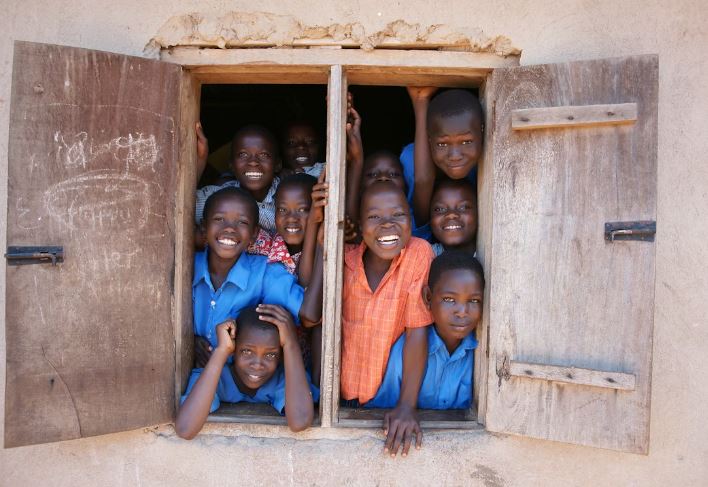
3. Nearly half (48%) of Uganda’s population is under 14 years old, but many children do not receive proper education or care due to poverty. Thousands of children have suffered as child soldiers, and 800,000 refugees live in harsh conditions in camps. The violent group known as the Lord’s Resistance Army (LRA) has caused 2 million people to flee their homes and has led to 120,000 deaths. Uganda now hosts about 1.4 million refugees, the highest number in Africa. Churches and missionaries are needed to care for these children and refugees, showing them love and sharing the hope of the gospel. The AIDS infection rate has decreased to 5.4%, but 1.4 million people are still affected.
Let us pray that churches and mission groups continue to support AIDS patients, provide education, and care for orphans, so that those suffering may find healing and know that God is their Father.
》 Urgent prayer requests around the world need your prayer!