“New Zealand, to those who do what is right, I will show my salvation!”
“Those who sacrifice thank offerings honor me, and to the blameless I will show my salvation.”(Psalm 50:23,NIV)
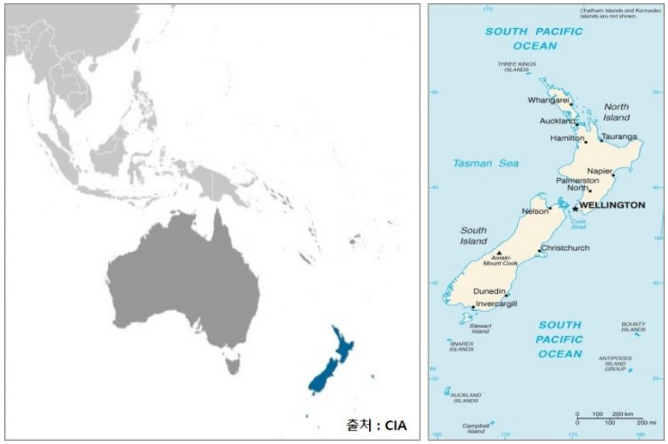
》 Country Profile
Continent | Oceania
Population | 4.99 million
Area | 270,534㎢
Capital City | Wellington (410,000) / Major city: Auckland (1.63 million)
People Groups | Total 92 groups, Europeans 64.1%, Pacific Islanders – Maori 16.5%, Samoans 3.9%, Tongans 1.8%, Cook Islanders 1.7% Asians – Chinese 4.9%, Indians 4.7%, Filipinos 1.5%
Unreached People Groups | 28 (8.1% of the population)
Official Language(s) | English, Maori, Samoan
Total Languages | 76
Bible Translations | Completed 65, New Testament 5, Partial 3
Religion | Christianity 51.7% (Protestant 19%, Catholic 13%, Anglican 8%), Non-religious 37.1%, Hinduism 4.6%, Islam 2.1%, Ethnic Religion 1.8%, Buddhism 1.5%, Evangelical 18.1%(900,000 people)
》 About New Zealand
New Zealand was first settled by the Māori—descendants of Polynesians—around the 10th century. In 1642, Dutch navigator Abel Tasman became the first European to chart the islands. Captain James Cook later explored the territory in 1769, paving the way for British settlement. In 1840, the Treaty of Waitangi was signed between Māori chiefs and the British Crown, marking the beginning of colonial rule. Land wars and introduced diseases during the 19th century reduced the Māori population by about half. New Zealand became a self-governing dominion in 1907 and fought alongside the UK in both World Wars. Today, it is a constitutional monarchy with King Charles III as head of state. Christopher Hipkins has served as Prime Minister since November 2023.
The economy is built around tourism, agriculture, and timber exports, while advancing in technology and software. Per‑capita trade levels are globally competitive; however, exports remain largely primary goods, and approximately 80% of imports are manufactured products. China is one of New Zealand’s most significant trading partners—New Zealand exports over NZ$17 billion in goods and $3.1 billion in services to China annually. The country has faced a chronic current‑account deficit—around 6% of GDP—but it has been narrowing, with recent trade data showing a US$510 million surplus in February 2025.
New Zealand’s GDP per capita is approximately $48,747.
》 Scripture Focus
| Psalm 50:1–5, 22–23(NIV) 1 The Mighty One, God, the LORD, speaks and summons the earth from the rising of the sun to where it sets. 2 From Zion, perfect in beauty, God shines forth. 3 Our God comes and will not be silent; a fire devours before him, and around him a tempest rages. 4 He summons the heavens above, and the earth, that he may judge his people: 5 “Gather to me this consecrated people, who made a covenant with me by sacrifice.” 22 “Consider this, you who forget God, or I will tear you to pieces, with no one to rescue you:” 23 “Those who sacrifice thank offerings honor me, and to the blameless I will show my salvation.” |
》 Prayer Points
1. In the early 20th century, most New Zealanders identified as Christian. However, by 2018, the non-religious population had risen to 48.2%. That figure has since declined to around 37%. Meanwhile, immigration has brought rapid growth among Hindu, Muslim, and Buddhist communities. The proportion of Christians has continued to decline slowly, now making up just about half the population. Anglicans, Presbyterians, Methodists, and Catholics have all seen significant decreases. Churches are deeply influenced by secularism and New Age thinking, and only 14% of the population attended weekly services as of 2010. Denominational divisions are widespread, and efforts toward unity have weakened. While the New Zealand Christian Network exists to connect churches and organizations across the country, it has struggled to fulfill that role effectively. Let us pray for a renewed fear of the Lord to return to the church, and for the light of the gospel to bring repentance and transformation among believers. May New Zealand die and rise with Christ, living in His resurrection life, walking in righteousness, and receiving salvation.
2. New Zealand has long been a missionary sending nation. In 2010, over 1,000 overseas missionaries were sent out, and Mission Interlink and many churches now share a vision to raise and send 3,000 missionaries. Among the 620,000 Māori, the gospel reach is still low—about 5%. Many live with high unemployment, poverty, crime, domestic violence, and youth gang issues. Some follow syncretic cults like Mormonism, Ringatū, and the Rātana Church. Many Polynesians from the Cook Islands, Tokelau, Niue, Samoa, and Tonga have come to New Zealand for work and now live mostly in low-income areas in South Auckland. Additionally, Chinese, Indian, Southeast Asian, and Muslim migrants are growing in number, now making up over 20% of Auckland’s population. Let us pray that churches and mission groups will be called to share the gospel with these people groups. May the Lord, from the rising to the setting of the sun, shine the light of truth on the nations and bring salvation.
3. New Zealand’s education system is built on strong secular foundations, leaving few young Christians who are actively living out their faith. Scripture Union (SU) shares the gospel and disciples youth in middle and high schools. On university campuses, TSCF (IFES) and Tandem Ministries (CCCI) lead student missions. The Churches Education Commission is a nationwide body for school-based evangelism.
Let us pray that through student ministries and churches, the next generation in New Zealand will hear the gospel, give thanks to God, and become a people who glorify Him in every part of life.
》 Urgent prayer requests around the world need your prayer!