“Malawi will serve Him without fear, in holiness and righteousness, all its days!!”
To rescue us from the hand of our enemies, and to enable us to serve him without fear in holiness and righteousness before him all our days. (Luke 1:74-75,NIV)
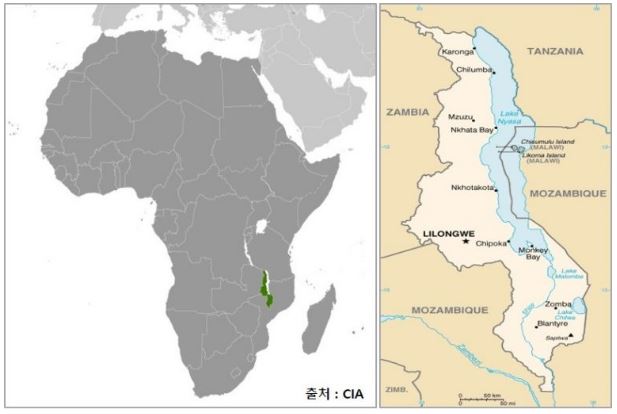
》 Country Profile
Continent | Africa
Population | 21.27 million
Area | 118,484㎢, Located along Lake Malawi in the inland central-eastern Africa.
Capital City | Lilongwe (1.27 million people)
People Groups | Total 26 groups, Chewa 34.3%, Lomwe 18.8%, Yao 13.2%, Ngoni 10.4%, Tumbuka 9.2%, Sena 3.8%, Mang’anja 3.2%, Tonga 1.8%
Unreached People Groups | 4 Groups (10.9% of the population)
Official Language(s) | English, Chichewa
Total Languages | 23
Bible Translations | Completed 16, New Testament 4, Partial 1
Religion | Christianity 74% (31% Protestant, 36% Catholic), Muslim 15.4%, Ethnic religions 8.2%, Evangelical 17% (3.61 million people)
》 About Malawi
Malawi derives its name from the Maravi Kingdom. It became a British protectorate in 1892, later known as the British Central Africa Protectorate from 1893 to 1907. From 1953 to 1963, it was part of the Federation of Rhodesia and Nyasaland before gaining independence in 1964. Following independence, Hastings Banda ruled for 30 years, imposing a harsh dictatorship. In 1993, a multi-party democracy was introduced through a national referendum. In the general election, the United Democratic Front led by Bakili Muluzi won power but stepped down after ten years. After several changes in leadership, former president Peter Mutharika won the September 2025 election and was inaugurated as president.
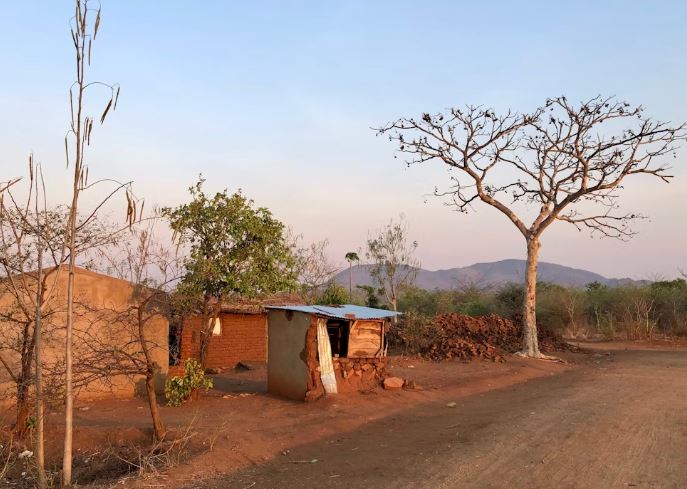
Malawi’s economy remains one of the poorest countries in the world, with approximately 80% of the population engaged in agriculture. The country faces severe food shortages, exacerbated by rapid population growth, limited farmland, unpredictable weather conditions (droughts and heavy rains), widespread corruption, the AIDS epidemic, and high unemployment. The economy relies heavily on agriculture, with tobacco, tea, and cotton as its main export commodities. Tobacco alone accounts for over half of total exports. Malawi remains highly dependent on foreign aid, receiving significant economic support from the International Monetary Fund (IMF), the World Bank, and various donor countries. In recent years, Malawi has begun to develop its tourism industry, particularly around Lake Malawi, which covers 20% of the country’s territory and serves as a key attraction for economic growth.
Malawi’s GDP per capita is approximately $481.
》 Scripture Focus
| Luke 1:68-75(NIV) 68. “Praise be to the LORD, the God of Israel, because he has come to his people and redeemed them. 69. He has raised up a horn of salvation for us in the house of his servant David 70. (as he said through his holy prophets of long ago), 71. salvation from our enemies and from the hand of all who hate us— 72. to show mercy to our ancestors and to remember his holy covenant, 73. the oath he swore to our father Abraham: 74. to rescue us from the hand of our enemies, and to enable us to serve him without fear 75. in holiness and righteousness before him all our days. |
》 Prayer Points
1. Christianity in Malawi has steadily grown, with the gospel reaching every corner of the country and even sparking revivals in some regions. The Church of Central Africa Presbyterian (CCAP) is the largest Protestant denomination. While many believers are nominal Christians influenced by traditional religions, there are also many devout leaders and faithful followers. However, the rapid growth of churches has outpaced the training and supply of pastors and ministry workers. Poverty also poses a significant challenge, making it difficult for seminarians and pastors to receive proper theological education. Currently, 17 Protestant-run seminaries and Theological Education by Extension (TEE) programs are training pastors and church leaders. Let us pray that the LORD will raise up more workers who are firmly rooted in the truth of Scripture and well equipped through theological training. May the churches in Malawi come to know the God who watches over their nation and become fearless witnesses of the gospel, serving Him in holiness and righteousness all their days.
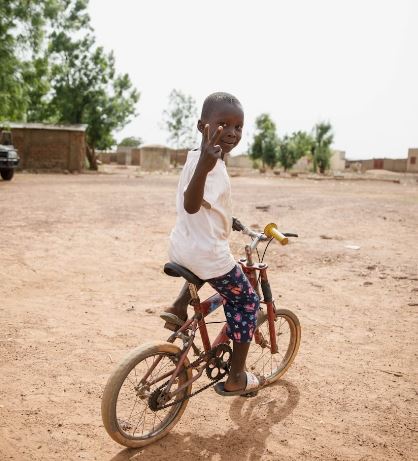
2. Several international missionary organizations actively serve in Malawi, including the International Mission Board (IMB), Liebenzell Mission, International SIM Mission, and the Pentecostal Assemblies of Canada (PAoC). These organizations focus on evangelism and Christian education, working alongside local communities. Malawi’s youth make up 65% of the population, but many live in desperation due to extreme poverty, the AIDS crisis, and high unemployment. Despite these hardships, various Christian ministries actively serve young people, including Scripture Union (SU), International Fellowship of Evangelical Students (SCOM/IFES), Life Mission/CCCI, and Chi Alpha. The SCOM ministry alone has over 30,000 students participating in more than 500 groups across the country. Meanwhile, CCCI (Campus Crusade for Christ International) extends its reach beyond campuses, partnering with local churches to spread the gospel and provide discipleship training. Additionally, joint ministries with various churches, such as the “New Life for All” program, house church meetings, and prayer movements, continue to grow.
Let us pray that foreign missionaries and local churches will humbly work together to advance the gospel in Malawi, raising disciples of Christ who will spread the message of salvation. Let us also pray that the Lord will have mercy on Malawi’s youth, guiding them through the Word and prayer, so that they rise up as a generation of faith.
3. The Yao people, numbering over 2 million, are Malawi’s largest missionary challenge, as over 99% of them are Muslim, with only 1% of the population evangelized. Despite the dedicated work of Christian Brothers, SIM, Frontiers, the Australian South African Baptists, and the Deeper Life Bible Church, very few Yao people have come to faith in Christ. Meanwhile, Islamic organizations, such as the African Muslim Foundation, have invested heavily in Malawi, establishing primary schools, offering scholarships for university students to study in Islamic nations, and promoting Islam through aid, relief efforts, and mosque construction. We thank God that the Bible has been fully translated into the Yao language. Let us pray that this Bible will be widely distributed and that the gospel will be actively shared through audio Bible programs and radio broadcasts, leading many Yao people to salvation. Among Malawi’s Asian communities, the Gujarati (55,000 people) and Kachi (14,000 people) follow Hinduism and Islam and have little exposure to the gospel. The Swahili people, though a small group of fewer than 4,000, are mostly Muslim, with very few Christian believers.
Let us pray that Malawi’s unreached people groups will be rescued from spiritual darkness and be born again as children of God.
Approximately 1 million people in Malawi are living with AIDS, ranking the country 11th globally. In 2020 alone, 12,000 people died from the disease. A large proportion of those infected are young people between the ages of 15 and 24, with women affected at twice the rate of men. There are also around 600,000 AIDS orphans. Let us pray that effective education efforts will lead to greater prevention and that treatment programs will be well managed. May the LORD have mercy on those who suffer, deliver them from the hands of the enemy, and restore them to serve Him in holiness and righteousness.
》 Urgent prayer requests around the world need your prayer!