“The LORD upholds and lifts up Zimbabwe!”
The LORD upholds all who fall and lifts up all who are bowed down.(Psalm 145:14,NIV)
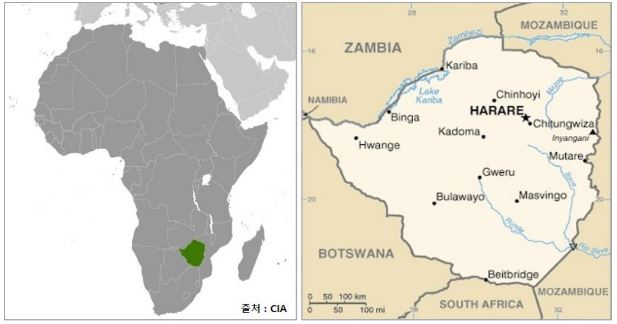
》 Country Profile
Continent | Africa
Population | 15.41 million
Area | 390,757㎢, Located in the interior of south-central Africa.
Capital City | Harare (1.56 million people)
People Groups | Total 41 groups, Shona 56.2%, Ndebele 12.4%, Ndau 7.2%, Manyika 3%, Nyanja 3%, Tsonga 1.9%, Karanga 1.5%, Zezuru 1.3%
Unreached People Groups | 2 Groups (0.2% of population)
Official Language(s) | English, Shona, Ndebele
Total Languages | 36
Bible Translations | Completed 26, New Testament 6, Partial 1
Religion | Christianity 76.8% (independent church 40%, Protestant 22%), Ethnic religion 21.7% Evangelical 25.2% (3.73 million people)
》 About Zimbabwe
Zimbabwe was a powerful kingdom about 600 years ago, flourishing through its rich gold mines, with its capital in Great Zimbabwe. However, in the 17th century, as the gold ran out, the region transitioned into a decentralized society based on farming and livestock. Around 1885, it became known as Southern Rhodesia under British protection and became a self-governing colony in 1923. Following years of conflict with the white minority government, internal divisions among liberation groups, and violent resistance, Zimbabwe gained independence from Britain in 1980 and adopted its current name, which means “stone house” in the Shona language. Robert Mugabe, who followed a socialist path, came to power and ruled with fear for 37 years, during which he violently suppressed opposition and led the country into one of the worst economic collapses in the world. In 2017, a military coup ended Mugabe’s reign, and Emmerson Mnangagwa became president in 2018 under a presidential system.
Zimbabwe’s economy heavily relies on mining and agriculture. From 1998 to 2008, the economy faced a severe downturn. To cover budget deficits, the Reserve Bank printed money, which triggered hyperinflation. In early 2009, Zimbabwe adopted a multi-currency system, allowing the use of the US dollar, South African rand, and Botswana pula, which helped bring inflation below 10%. From 2010 to 2013, Zimbabwe experienced strong economic growth of over 10% per year. However, from 2014 to 2017, growth fell below 3% due to poor harvests, declining diamond revenues, and reduced investment. Despite ongoing challenges like currency shortages, trade deficits, inflation, and poor governance, the IMF sees hope for economic growth through increased output in agriculture and mining.
Zimbabwe’s GDP per capita is approximately $2,700.
》 Scripture Focus
| Psalm 145:13-19(NIV) 13 Your kingdom is an everlasting kingdom, and your dominion endures through all generations. The LORD is trustworthy in all he promises and faithful in all he does. 14 The LORD upholds all who fall and lifts up all who are bowed down. 15 The eyes of all look to you, and you give them their food at the proper time. 16 You open your hand and satisfy the desires of every living thing. 17 The LORD is righteous in all his ways and faithful in all he does. 18 The LORD is near to all who call on him, to all who call on him in truth. 19 He fulfills the desires of those who fear him; he hears their cry and saves them. |
》 Prayer Points
1. In Zimbabwe, 76% of the population identifies as Christian, and around 25% (3.7 million people) are evangelical believers. However, this marks a drop of more than 5% since 2010, showing a decline in the momentum of church planting and healthy growth through the Target 2010 initiative, which had once united churches with a shared vision. In the late 1990s, under Mugabe’s dictatorship, the country experienced two major droughts and severe economic hardship. As public support declined—especially among war veterans—the government launched a controversial land reform policy. White-owned farms were seized and redistributed to Black citizens, but this led to racial conflict and worsened relations with Western nations like the UK. When the country was in crisis, the Church was called to be proclaiming the gospel—but internal cleansing and renewal were needed first. Let us pray that the Church would reject African traditional religion, magic, and witchcraft, and return to purity through the gospel of the cross. Let us also pray for greater unity among evangelicals, mainline denominations, and African Independent Churches (AIC), which often struggle with division and disunity. May the Church turn from compromise and seek God earnestly—the One who upholds the fallen and lifts up the humble.
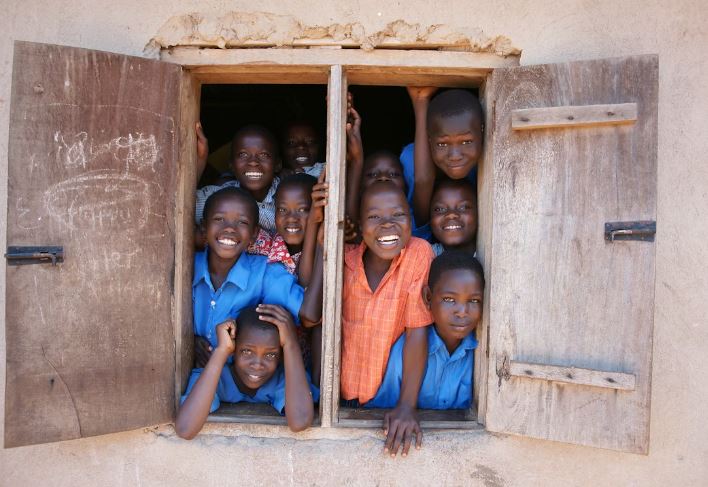
2. With 58% of Zimbabwe’s population under the age of 24, many youth and children are growing up without proper education due to a collapsed school system. The Scripture Union (SU) is actively serving vulnerable children and orphans, especially in secondary schools, and offers HIV/AIDS prevention education. Let us pray for more workers to be sent to minister to the next generation and for strong partnerships with local churches to help lead young souls to Christ. May hopeless youth turn to the Lord and find fulfillment under the reign of God’s eternal kingdom.
3. In this unstable nation, Christian media is more essential than ever. The Bible Society has published modern translations of the Bible in Ndebele, Shona, and Ndau (with support from SIM and USB) and also released an audio Bible in Shona. Ministries like Good News Media and Global Recordings Network (GRN) are creating evangelistic content in 65 languages and dialects. Let us pray for and bless the workers who continue these efforts under difficult conditions. May the gospel of the cross reach the unreached people groups and all who sincerely seek God through the Word, media, and broadcasts.
》 Urgent prayer requests around the world need your prayer!